English-speaking dentist · Jamsil, Songpa-gu, Seoul
Seoul Daru Dental Clinic — English-speaking dentist in Jamsil, Seoul
An English-speaking dental clinic in the Jamsil area of Songpa-gu, Seoul — the neighborhood of Lotte World and Seokchon Lake. We are on the 5th floor of 94 Seokchonhosu-ro, a short walk from Jamsilsaenae Station (Line 2) and Samjeon Station (Line 9). The head dentist sees you from the first consultation through treatment, and every plan starts with an examination and an explanation of your options.
Consultations in English: Dr. Seongjin Kang, the head dentist, explains your examination results and treatment options to you directly in English. English receipts and treatment certificates for insurance claims are available on request.
At a glance
- Address: 5F, 94 Seokchonhosu-ro, Songpa-gu, Seoul (서울시 송파구 석촌호수로 94, 5층)
- Subway: Jamsilsaenae Station Exit 3 (Line 2) · Samjeon Station Exit 1 (Line 9)
- Open Mon–Sat; late hours until 8:30 PM on Tuesdays; closed Thursdays, Sundays and public holidays.
- Consultation in English with the head dentist; English receipts and treatment certificates on request.
- Booking: by phone, KakaoTalk message, or Naver booking (Korean). If you would like your consultation in English, just mention it when you book.
Opening hours (Korea time, KST)
- Mon · Wed · Fri
- 9:30 AM – 6:30 PM
- Tuesday (late hours)
- 9:30 AM – 8:30 PM
- Saturday
- 10:00 AM – 2:30 PM (no lunch break)
- Lunch break (weekdays)
- 12:30 PM – 2:00 PM
- Closed
- Thursday, Sunday, public holidays
Clinic schedule
November 2026
| Sun | Mon | Tue | Wed | Thu | Fri | Sat |
|---|---|---|---|---|---|---|
| 1Closed Closed | 2 Open | 3 Open | 4 Open | 5Closed Closed | 6 Open | 7 Open |
| 8Closed Closed | 9 Open | 10 Open | 11 Open | 12Closed Closed | 13 Open | 14Ortho Open — orthodontic appointments |
| 15Closed Closed | 16 Open | 17 Open | 18 Open | 19Closed Closed | 20 Open | 21 Open |
| 22Closed Closed | 23 Open | 24 Open | 25 Open | 26Closed Closed | 27 Open | 28Ortho Open — orthodontic appointments |
| 29Closed Closed | 30 Open |
- Closed every Thursday and Sunday
- Orthodontic appointments: Nov 14 (Sat), Nov 28 (Sat)
Updated 2026-11-19. Holiday closures follow the Korean public holiday calendar.
How to book
- Phone — +82-2-6285-2275 during opening hours.
- KakaoTalk — message our channel; we reply during opening hours.
- Naver booking — our Naver Place page (in Korean).
For your first visit, please bring your ID (passport or alien registration card) and a list of any medicines you take. If you have recent dental X-rays or records from another clinic, bring them too.
Treatments
Most treatments have their own English guide; Korean pages are linked as well (your browser can translate them).
- Front-tooth resin bonding — Closing gaps between front teeth, black triangles and chipped edges with tooth-colored resin, usually without drilling the tooth down. English guide · Korean guide
- Minimal-prep veneers — Porcelain veneers planned around your bite and alignment, with as little tooth reduction as the case allows. English guide · Korean guide
- Teeth grinding, clenching & jaw joint (TMJ) — Diagnosis with jaw-joint X-rays and a TMD assessment first, then physical therapy, botulinum toxin injections, a night splint or medication as needed. English guide · Korean guide
- Full-arch implants — 3D CT and computer-guided planning; the surgery is done by the head dentist, with conscious sedation available. English guide · Korean guide
- Implant revision — Finding why an existing implant loosened or hurts, then tightening, remaking the crown, or bone grafting and re-placing it. Korean guide
- Crowns (gold or zirconia) — How to choose between gold and zirconia crowns for your bite and tooth. English guide · Korean guide
- Cavity & cracked-tooth diagnosis — Q-ray (blue-light fluorescence) and bitewing X-rays to find hidden cavities between teeth before deciding on treatment. Korean guide
- Cracked teeth — Sharp pain only when biting on one spot is a typical sign; treated step by step from monitoring to resin, crown or root canal. Korean guide
- Teeth whitening — One-day in-office whitening (three rounds in one visit) after a check-up; results vary from person to person. English guide · Korean guide
- Conscious sedation (“sleep dentistry”) — For strong dental anxiety or gag reflex — you stay breathing on your own and responsive, with continuous monitoring. English guide · Korean guide
- Gentler local anesthesia — Topical numbing, a fine short needle and a computer-controlled injector to reduce the sting of the injection. Korean guide
Treatment guides
Full-arch dental implants in Seoul
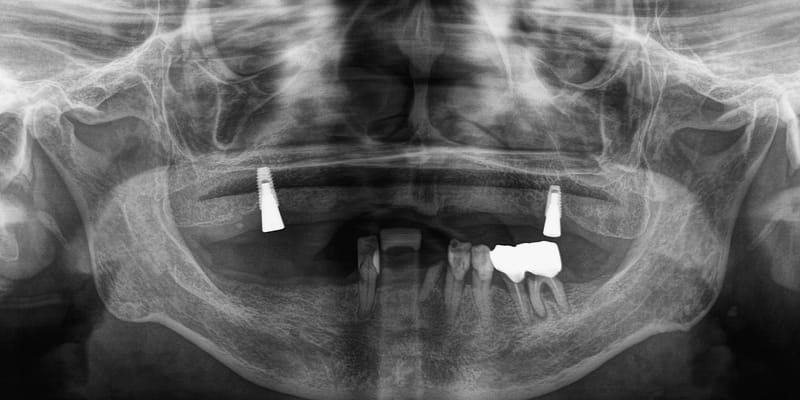
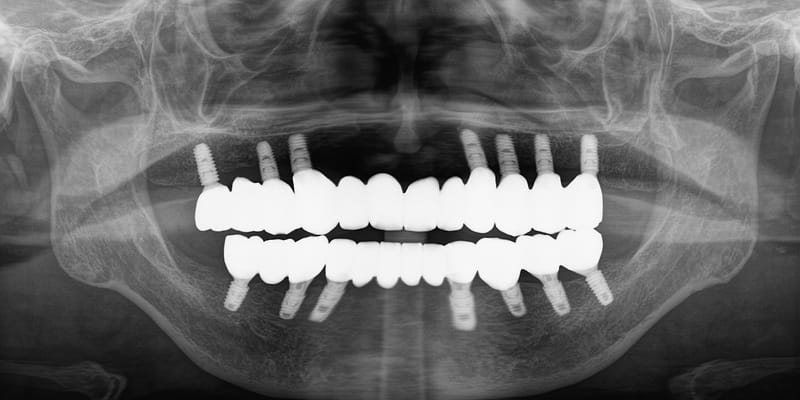
For people who have lost most of their teeth or struggle with dentures, we plan the whole jaw as one treatment (full-arch or full-mouth dental implants). We diagnose with a 3D CT scan and set the implant positions in a computer simulation before surgery; the head dentist performs the surgery, and conscious sedation is available if you are anxious.
- Usually around eight implants support a full jaw; the number depends on your remaining teeth and bone.
- Osstem SOI fixtures with custom-made abutments are used for every patient.
- If the implants are stable enough, fixed temporary teeth are placed 1–2 weeks after surgery; the final teeth are made 4–6 months after placement, based on the temporaries.
- The total treatment time varies with your bone and general health.
Full guide: Full-arch dental implants in Seoul · Korean guide
Porcelain veneers (laminates) in Seoul
A veneer (often called a “laminate” in Korea) is a thin layer of ceramic bonded to the front of a tooth to change its shape and color. Because the tooth is usually trimmed slightly (often about 0.2–0.5 mm), we first check whether orthodontics, whitening or resin bonding would do the job with less trimming, together with our orthodontist when needed.
- Consultation and diagnosis of your alignment and bite
- A mock-up to plan the shape and how much to trim before anything is removed
- First visit — the teeth are prepared, impressions taken and temporary veneers placed
- The ceramic is built up layer by layer at our partner dental laboratory
- About one week later — the veneers are bonded and your bite is checked
Trimmed enamel cannot be restored, veneers can chip or come off, and teeth may feel sensitive for a while after bonding.
Full guide: Porcelain veneers (laminates) in Seoul · Korean guide
Fillings, inlays and crowns
How a decayed tooth is repaired depends on how far the decay has spread. A small cavity is filled with tooth-colored resin; a larger one in a back tooth is restored with an inlay (a ceramic or gold piece made to fit the cavity); when much of the tooth is lost or it has cracked, the tooth is covered with a crown.
- Gold crowns fit very precisely and are gentle on the opposing teeth, but the yellow color shows and the cost is higher.
- Zirconia crowns are tooth-colored and strong, and cost less than gold.
- If you grind your teeth heavily or the tooth is too short to trim enough, we recommend gold; otherwise you can choose.
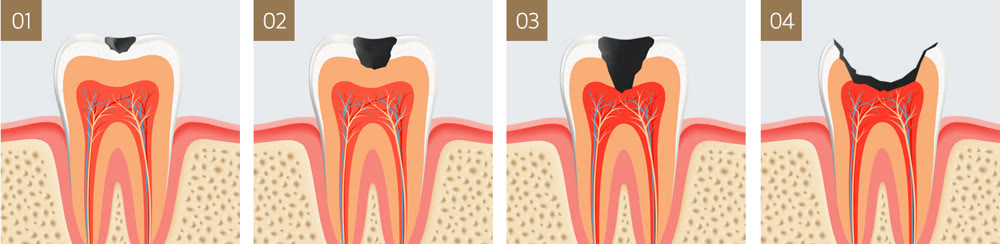
- Enamel — resin filling
- Dentin — filling or inlay
- Nerve — root canal treatment
- Root — crown or extraction
Full guide: Dental crowns, inlays and fillings in Seoul · Korean guide
Wisdom tooth extraction
Wisdom teeth that are hard to clean can decay, inflame the gums around them, push on the neighboring teeth, or cause bone loss, so we often recommend extraction (removal) before problems grow — ideally when you are younger, as removal becomes harder with age.
- When the roots lie close to the nerve, we check their position on 3D CT before extraction to reduce the risk of nerve injury.
- Teeth that are fully buried in bone may need minor surgery, such as sectioning the tooth or removing a little bone.
- Swelling, pain and bleeding for a few days are common; numbness can rarely occur when the roots are near the nerve.

- Decay — hard to clean
- Gum inflammation
- Crowding the teeth
- Bone loss
Root canal treatment
When decay or injury reaches the nerve (pulp) of a tooth, root canal treatment removes the infected nerve, cleans and disinfects the canals inside the roots, and seals them, so the tooth can be kept instead of extracted.
- Treatment is done under local anesthesia; avoid eating until the numbness wears off.
- The tooth may feel uncomfortable for about two weeks to a month while the root tip heals.
- Avoid biting hard on the tooth until the final crown is placed — a root-treated tooth is brittle and can crack.
- Some teeth need retreatment, and in rare cases the tooth cannot be saved.
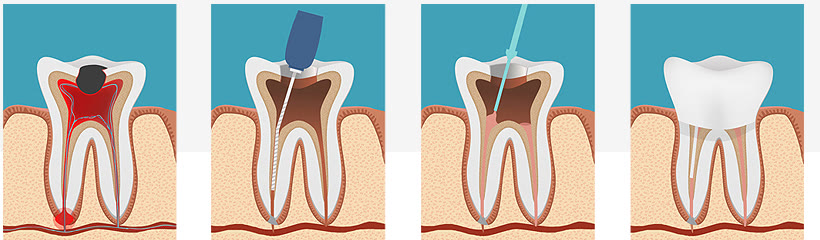
- Infected nerve
- Removal and disinfection
- Filling the canals
- Crown to protect the tooth
Front-tooth resin bonding (gap closing)
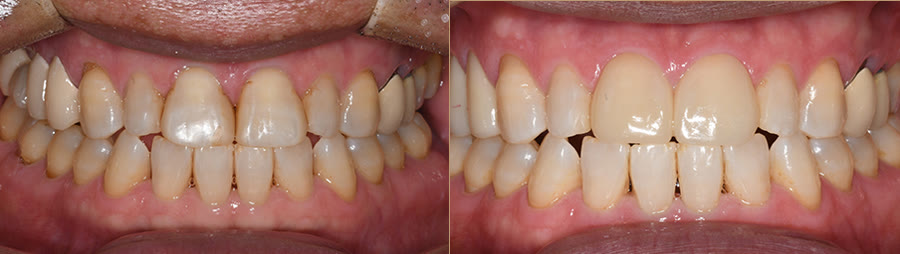
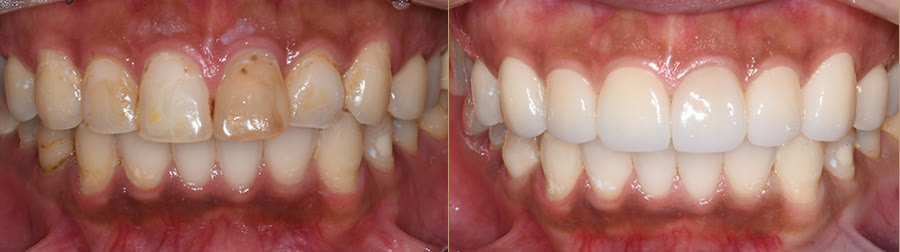
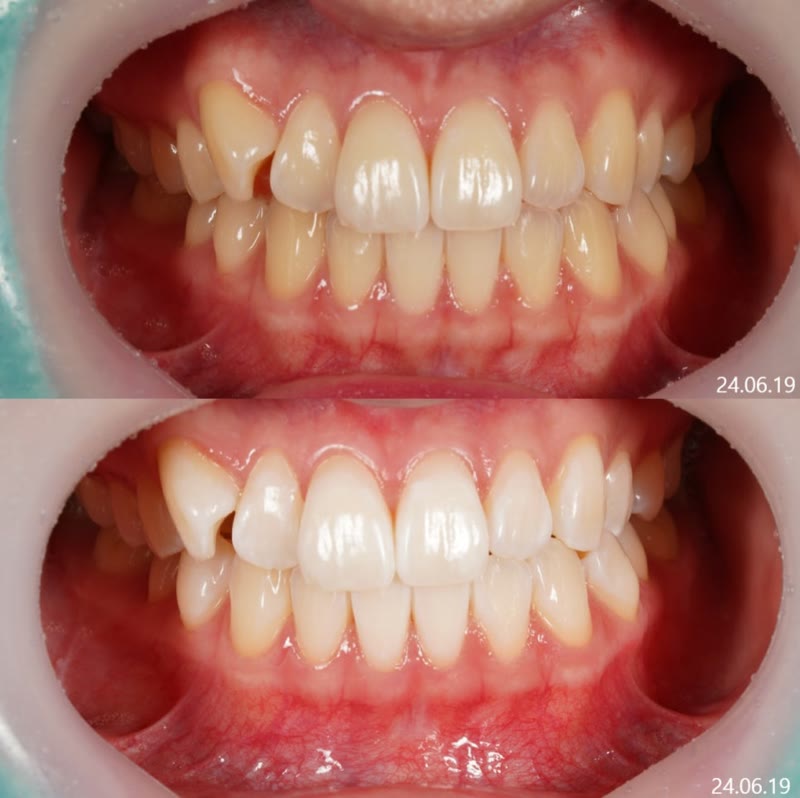
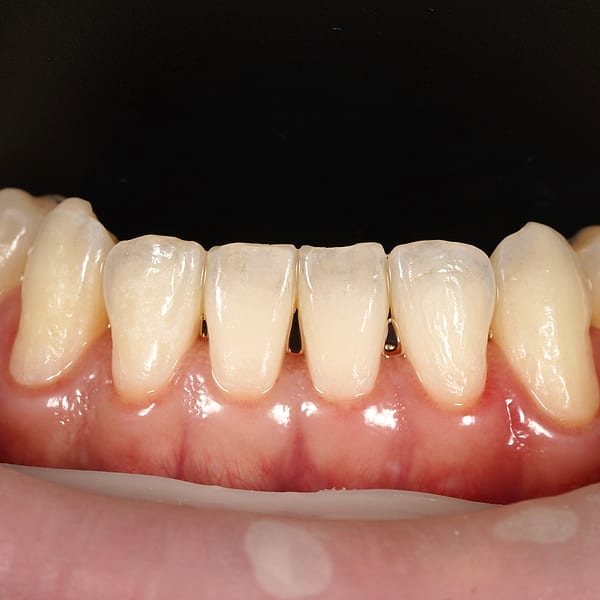
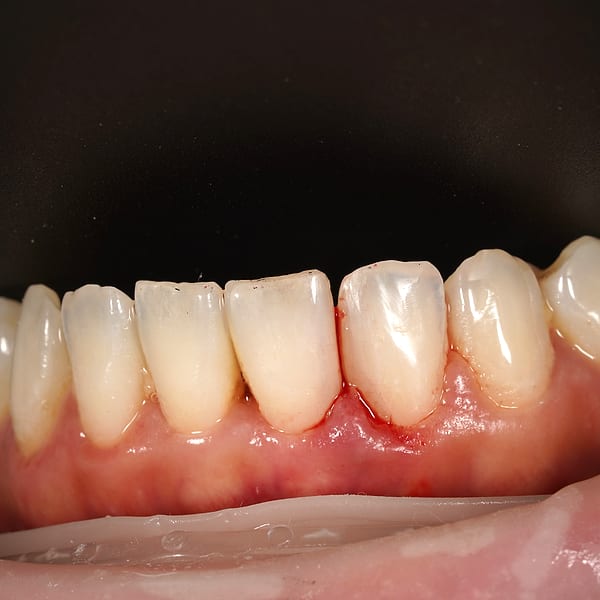
Gaps between the front teeth (diastema), black triangles near the gums and chipped edges can often be closed by adding tooth-colored composite resin, usually without trimming the tooth. A typical visit takes about 30 minutes.
- The head dentist designs the color and shape at the chair.
- The surface is polished on the day and polished again a day later.
- If the gap is large or caused by tooth alignment, we compare resin with veneers or orthodontics before deciding.
See the before & after photos below.
Full guide: Front-tooth composite (resin) bonding in Seoul · Korean guide
Teeth whitening (one-day, in-office)
One-day whitening applies the whitening treatment three times in a row in a single visit of about two hours, after a check-up.
- We measure the shade with a shade guide; teeth usually brighten by around three shade steps, but results vary from person to person.
- It works well on surface stains from coffee or tea. Discoloration from inside the tooth (after a root canal or an injury) may need internal bleaching instead.
- Avoid strongly colored food and drinks for two days afterwards.
- Sensitive teeth may ache for a while, usually settling within a week.
Teeth grinding, jaw clenching and TMJ
Teeth grinding (bruxism) and clenching can wear the teeth and strain the jaw. Clicking, pain or difficulty opening your mouth can be signs of a jaw joint (TMJ) disorder. We start with jaw-joint X-rays and a TMD assessment, and the head dentist examines you in person.
- Treatment is chosen from physical therapy, botulinum toxin injections, a night splint, medication or injections, as needed.
- The botulinum toxin is opened in front of you so you can check the product and dose before the injection.
- Injections are usually repeated after about four months at first, then the interval is extended to five or six months.
Full guide: Teeth grinding, jaw clenching and TMJ treatment in Seoul · Korean guide
Conscious sedation (sleep dentistry)
For strong dental anxiety, a strong gag reflex or long treatments such as wisdom tooth removal, conscious sedation lets you be treated in a relaxed, drowsy state. Unlike general anesthesia, you keep breathing on your own and can respond when spoken to; many people remember little of the treatment. In Korea it is often called “sleep dentistry”, but it is not general anesthesia.
- Midazolam given through a vein (IV sedation) is mainly used; its effect can be reversed with an antidote.
- Your condition is monitored continuously and recorded every five minutes, with oxygen and emergency equipment ready.
- We recommend coming with a companion; if you come alone, rest until you have fully recovered, and do not drive on the day.
Full guide: Conscious sedation (sleep dentistry) in Seoul · Korean guide
Fees (non-insured treatment)
| Treatment | Fee (KRW) |
|---|---|
| Dental implant (Osstem SOI Premium), per implant | ₩1,090,000 |
| Bone graft / sinus lift (if needed) | ₩300,000–1,000,000 / ₩800,000–1,500,000 |
| Front-tooth resin bonding, per surface (gap closing / chipped tooth) | ₩250,000 / ₩300,000 |
| Porcelain laminate veneer, per tooth | ₩700,000 (VAT excl.) |
| Botulinum toxin for bruxism / TMJ, 50 units | ₩130,000–275,000 (VAT excl.) |
| Night splint for bruxism | ₩800,000 |
| Zirconia crown (back / front tooth), core separate | ₩550,000 / ₩650,000 |
| Gold crown | ₩950,000 |
| Inlay (CEREC ceramic / gold) | ₩300,000 / ₩500,000 |
| Resin filling (back / front tooth) | ₩100,000 / ₩150,000 |
| One-day whitening (3 rounds) / single round | ₩300,000 (VAT excl.) / ₩150,000 |
| Conscious sedation (first / repeat) | ₩300,000 / ₩200,000 |
| Invisalign clear aligners | ₩4,900,000–6,990,000 |
Fees as of November 2026, the same as on our Korean fee table. The final fee is confirmed after your examination. Korean National Health Insurance covers some treatments for eligible patients.
Before & after — front-tooth resin bonding
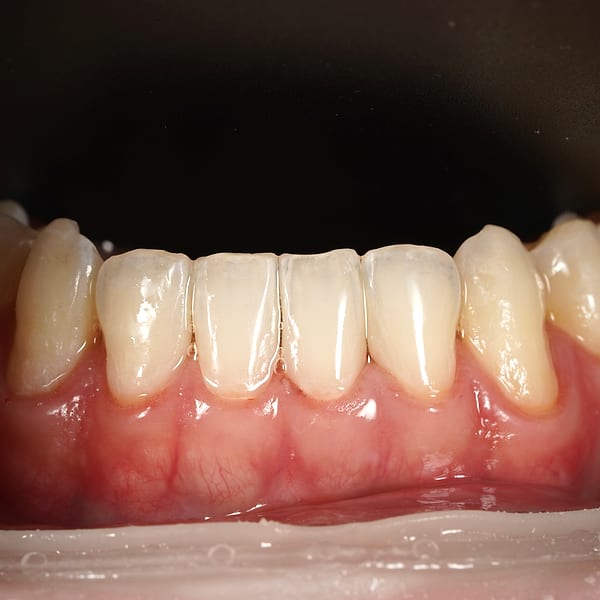
Treated 2026.02
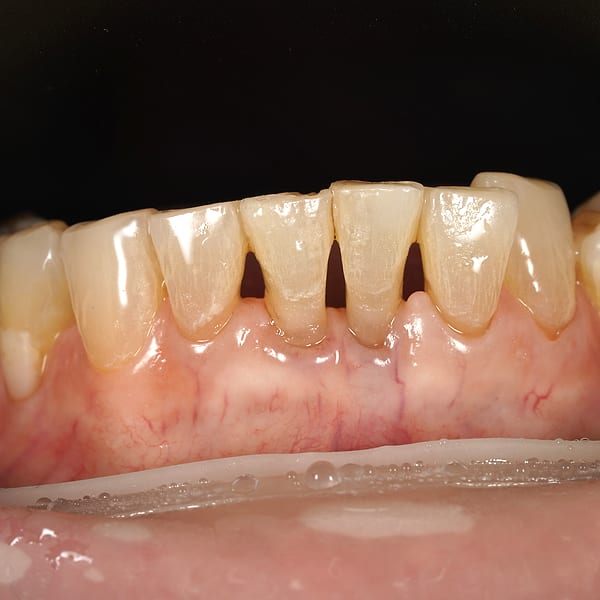
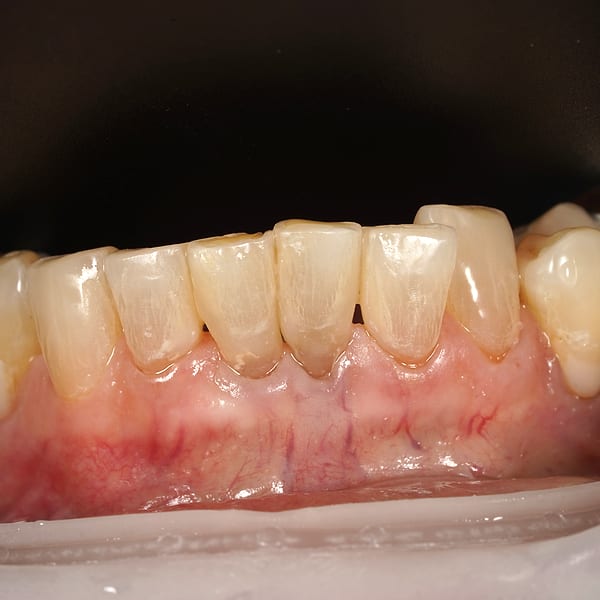
Treated 2026.07
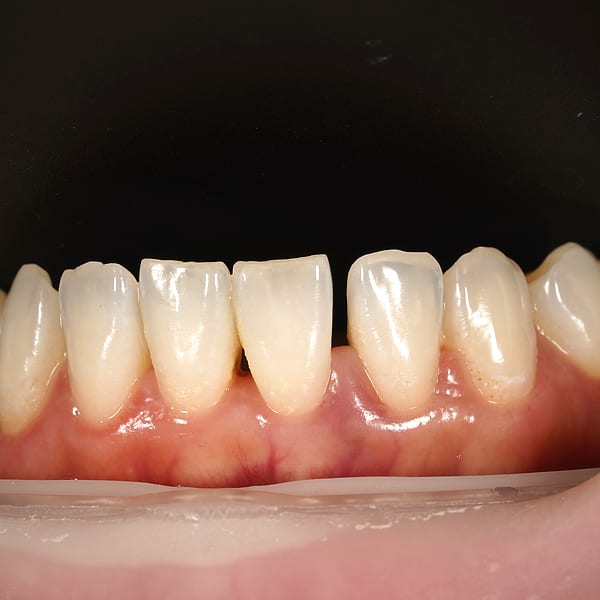
Treated 2026.01
Patients treated at our clinic; before and after photos are of the same person, taken under the same conditions with consent. Results vary from person to person, and side effects such as sensitivity, debonding or discoloration can occur.
Frequently asked questions
Is there an English-speaking dentist at Seoul Daru Dental Clinic?
Yes. Dr. Seongjin Kang, the head dentist, explains your examination results and treatment options to you directly in English. Just mention that you would like your consultation in English when you book.
Can I get an English receipt or treatment certificate for my travel or overseas insurance?
Yes. We issue English receipts and treatment certificates on request, which you can submit to your insurer when you file a claim.
How much do dental implants cost at your clinic in Seoul?
As of November 2026, an implant (Osstem SOI Premium) is ₩1,090,000 per implant. Bone grafting or a sinus lift, if needed, is charged separately. The final fee is confirmed after your examination; the full fee table is on this page.
How long does it take to get porcelain veneers?
On the first visit the teeth are prepared, impressions are taken and temporary veneers are placed. The final veneers are usually bonded about one week later; the schedule can vary from person to person. Please allow for a consultation beforehand and follow-up check-ups afterwards.
Are you open on Saturdays or in the evening?
Yes. We are open on Saturdays from 10:00 AM to 2:30 PM (no lunch break) and until 8:30 PM on Tuesdays. We are closed on Thursdays, Sundays and Korean public holidays.
Do you offer sedation for dental anxiety?
Yes. Conscious sedation (often called “sleep dentistry”) is available for strong dental anxiety, a strong gag reflex or long treatments such as wisdom tooth removal. You keep breathing on your own and are monitored throughout. We recommend coming with a companion; if you come alone, rest until you have fully recovered before leaving, and do not drive on the day of sedation.
Does Korean National Health Insurance cover dental treatment?
If you are enrolled in Korean National Health Insurance, it covers some treatments according to its rules. Non-insured treatments are charged according to our fee table.
Where is the clinic and how do I get there?
We are on the 5th floor of 94 Seokchonhosu-ro, Songpa-gu, Seoul (서울시 송파구 석촌호수로 94, 5층), near Exit 3 of Jamsilsaenae Station (Line 2) and Exit 1 of Samjeon Station (Line 9).
How do I book an appointment?
Call +82-2-6285-2275 during opening hours, send us a KakaoTalk message, or book through our Naver Place page. Let us know that you would like your consultation in English.
Our dentists

Dr. Seongjin Kang
Head dentist
Full-arch implants · Esthetic prosthodontics · Consultations in English
- Board-certified in Integrated Dentistry (Korea)
- M.S., Seoul National University School of Dentistry
- Internship, Seoul National University Dental Hospital
- Graduate, Korea Science Academy of KAIST
- B.S. in Physics, KAIST
- Advanced training course in temporomandibular disorders (TMD)
- Member, Korean Academy of Integrated Dentistry
- Member, Korean Academy of Esthetic Dentistry
- Lifetime member, Korean Dental Society of Anesthesiology
- Former director, Seoul Miso Dental Clinic
- Former director, Seoul Rio Dental Clinic

Dr. Suyeon Kim
Orthodontist
Invisalign · Orthodontics · Appointments on the 2nd and 4th Saturdays of each month
- Board-certified in Orthodontics (Korea)
- Board-certified in Integrated Dentistry (Korean Dental Association)
- D.D.S., Yonsei University College of Dentistry
- M.S. and Ph.D. in Orthodontics, Yonsei University Graduate School of Dentistry
- Adjunct professor, Department of Orthodontics, Yonsei University College of Dentistry
- Internship, Severance Hospital
- Orthodontic residency, Yonsei University Dental Hospital
- Member, Korean Association of Orthodontists
- Invisalign certified provider
Getting here
- Address
- 5F, 94 Seokchonhosu-ro, Songpa-gu, Seoul
서울시 송파구 석촌호수로 94, 5층 - Subway
- Line 2 Jamsilsaenae Station, Exit 3
Line 9 Samjeon Station, Exit 1 - Parking
- Mechanical parking at the building entrance on the ground floor
- Phone
- +82-2-6285-2275
Treatment results and duration vary from person to person, and side effects such as bleeding, infection, swelling, pain, sensitivity or gum changes can occur. We decide the right option for you after an examination and consultation. This page provides clinic information only.